Closing: The Operating System Is Never Finished
This is a draft of a life, not the final version of one. I want to be honest about that before you close the book.
When you write something like this, there is a pull to make it all look cleaner than it was. You can edit stories until they sound inevitable, turn mistakes into lessons too fast, make pain more elegant than it actually felt, write the models with more confidence than you had in the moment you needed them. I tried to avoid that, because the truth is I am still building this operating system, today, while you read it.
Family First is still tested by work. Protect the Machine is still tested by pain, routine, fear, and convenience. Two-Way Door Asymmetry is still tested by excitement and ego. Get Into the Weeds is still tested by the comfort of a nice high-level summary. You Only Have 24 Hours is still tested by the urge to do everything myself instead of trusting people with it. Aggressive Momentum is still tested by the risk of pushing too hard or waiting too long. The Compounding Effect is still tested by impatience, and The Infinite Game is still tested by short-term wins that look very attractive in the moment.
The models are not trophies. They are tools I need precisely because the opposite tendency is still alive in me. If I were naturally perfect at all of this, I would not need a single one of them.
A model exists because there is a recurring danger sitting right next to it. The model is just the reminder, placed exactly where I tend to fail.
There is one layer under all of these that I only named for myself after 30. I am stoic. I did not learn it from a book first, I looked back one day and saw it had always been running in me, quietly, since I was a kid taking a ball in the face on purpose. What it looks like in practice is this: when something goes wrong, I almost always assume it is my fault, and I assume everything depends on me. I refuse to blame other people. I insist on being the protagonist of my own story and never the victim. And even when something is clearly outside my control, I still go hunting for the angle where I could have done something differently.
I want to be honest that this is a demanding, double-edged way to live. Taking responsibility for everything makes you strong and it can also crush you, because you carry weight that is not always yours to carry. I am not selling it to you as the answer. I am telling you it is mine, and I keep it on purpose, because for me the cost of feeling like a victim is much higher than the cost of feeling responsible.
Two phrases hold the edges of this for me, and I repeat them like code I do not want to lose. The first: "The worst thing evil can do to you is make you evil" (A pior coisa que o mal pode lhe fazer é te tornar malvado). The second: "I can only give what I have, and I will not pay back evil with evil" (Eu só posso dar o que eu tenho, não vou retribuir o mal com o mal). Responsibility for everything does not mean becoming hard. It means I do not let what is done to me decide what I become.
Some of this got clearer to me from a book, When Bad Things Happen to Good People. It did not give me a tidy answer, and I did not want one. What it gave me was permission to stop demanding that suffering be fair before I deal with it. Bad things happen, to good people, with no invoice and no explanation. The only real question left is what you do next, and that is a question I can actually work with.
This book will change as I change. More stories will get added, some chapters will get sharper, some ideas will probably turn out wrong, and some models may get renamed or thrown away. That does not make this version false. It makes it alive. A static operating system goes obsolete; a living one updates. But the updates should not be random, they should come from reality: family life, business results, what my body tells me, customer trust, the team, investment outcomes, pain, love, grief, and the slow repeated evidence of what actually makes life better.
That is why I want to keep writing. Writing is not only communication. Writing is debugging. When an idea stays in my head, it can feel clear without being clear. The moment I write it down, the weak parts show up, the missing example becomes obvious, the contradictions surface, and the model either gets stronger or admits it was never ready.
This book started from a doubt that maybe an autobiography was not the right container, and I still think that. A chronological life story may come later, or pieces of it may keep leaking into these chapters. But the deeper story was never "what happened to me." The deeper story is:
- What did I learn to see?
- What did I decide to protect?
- What games did I choose to play?
- What histories did I refuse to repeat?
- What risks did I choose to take?
- What did I build from the material life handed me?
Those are the questions that matter to me now. If you reached this point, I hope you do not walk away just knowing more about me. I hope you walk away with a few sharper questions about yourself.
Because the goal was never to build a monument. The goal was to reverse engineer one operating system so another person could improve theirs.
And I mean one. I have never tried to reach a crowd, I have always worked to reach and change one life. The clearest proof is Codeftw, a free project I have run since 2017, and the whole time I kept telling myself the same thing: I am here for just one person. If only one person shows up and it changes their life, it was worth all of it. That person turned out to be Denilson. He showed up, his life changed, he is still with me today, and he is now a personal friend, not a statistic. That is the entire model in one name.
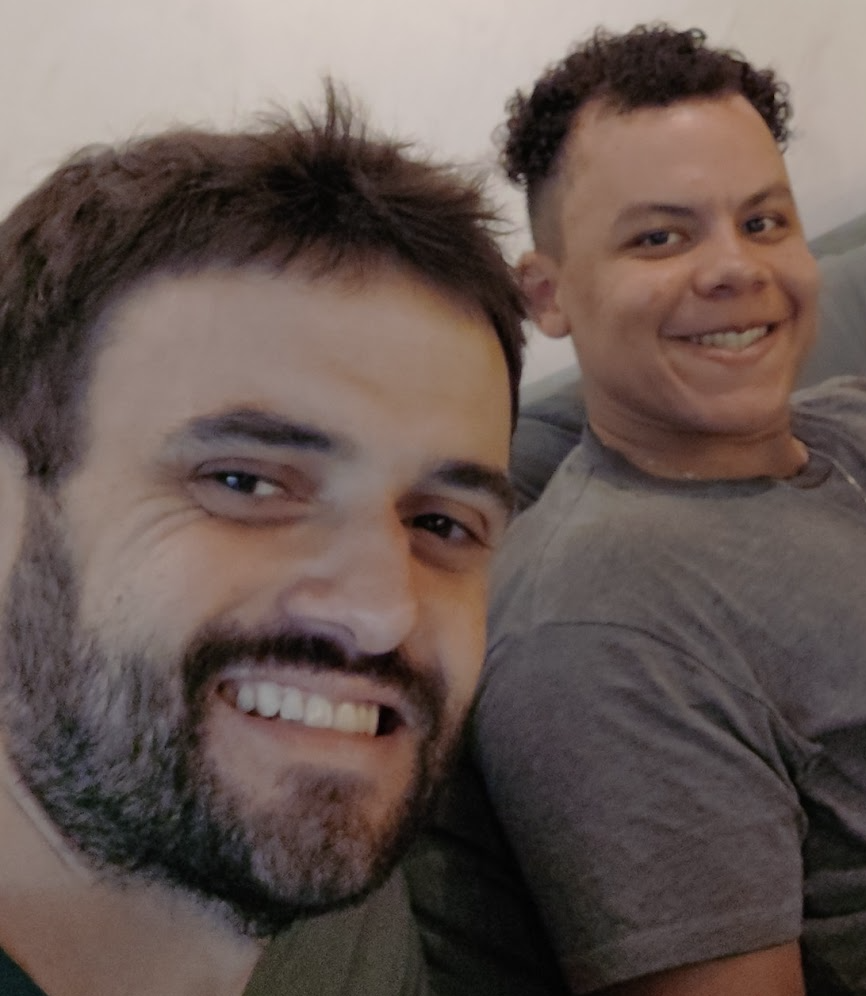
So if this book reaches one person, it was worth writing. If that person is you, let me know. And if it helped you, share it with the people you love and anyone you think it could help. Then go be with them. They do not last forever, and neither do you.
filipe@quave.com.br